Saturday, July 3, 2010

weeks 61-66: phase 2: interior paint prep & some phase 1 items

Leo the painter of C++ Construction stopped by to test if we had lead paint. It was more of a formality, as we all were fairly certain of the presence of lead. He and German took one week to remove the two layers of wallpaper and paint, and skim two coats of mudset on the original plaster walls in the baby’s room. The second week, Leo & German prepped the walls and trim of the two bedrooms and hall. It seems like the work is taking longer than usual, but Leo insists in making the area safe for us and his workers. Although this is now mandated by code, not all companies are certified to do lead paint abatement or sincerely care to take the necessary precautions. We truly appreciate the level of attention Leo has with this toxic substance.


Yuri the tile setter of Art Touch Construction also stopped by to measure and calculate how much tile was needed. I then promptly ordered the tile from Pratt & Larson, a local tile artisan. The tile work will need to wait until next month as the tile has a 6 week lead time. I forgot that this tile is made to order. Drats! Below are the before shots of the worn tile. We were on the fence about replacing it at this time. When we realized that we would not have another opportunity to do so for the next six years, we decided to pull the trigger.


Dana the finish carpenter of Guillory Construction spent a day finishing up some of the Phase 1 items. He installed the elbow catch at the kitchen cabs and changed out a broken pane in the casement. He also completed the easier Phase 2 tasks of installing picture rail in the baby’s room, truing the cabinet doors and drawers in the existing hallway built-ins and planing the door to the baby’s room so that it fit better. He’ll return to do more finish carpentry in a bit.


Aaron of Portland Metro Electric also swung by to complete the last of the Phase 1 work. He inverted an outlet in the laundry room so that the irrigation plug could more easily be hidden as well as installed a larger light in the master bedroom closet. Now, there’s only painting left in Phase 1. I think Phase 2 may be completed before Phase 1. The race is on!


I dropped off the bathroom vent grate at Bliss Restoration for powder coating. It should be done in a couple of weeks. It would look very grungy next to the newfloor tile had we left it in its worn condition. I am looking forward to having it look brand new.


The county appraiser stopped by to reassess the property. He was surprised that work was still going on. As I was just on my way out the door, I could not let him in, but he was able to assess the home from the exterior. He also remeasured the porch and deck, even though we only had cosemtic work done on them. The paperwork should be done in the next couple of months, and we should be paying our new taxes by next quarter.


Tune in next time for the completed interior paint!

Wednesday, May 19, 2010

weeks 54-60: phase 2 has begun!


Even though we have not finished Phase 1 completion of the basement, we’re rolling right into Phase 2. We had planned to wait a couple of years between phases, but decided to get things done sooner rather than later. As the tasks and scale are minor in scope, we opted to manage this portion ourselves.

We secured bids from the subcontractors: Tom Anctil of Anctil Heating & Cooling came by to price out the AC condenser install. During Phase 1, we had prepped the electrical for the AC unit so the install should be easy. And it was easy. Jeff of Anctil has already come out and installed the condenser. Scheduling during the off-season meant they were available immediately. Tom also made sure we got a great deal. We are now set for the summer. Thanks so much, Tom. We love you and Anctil Heating & Cooling!


Pete of Classic Sash & Door also returned to fix the last two sashes. We should have had him fix them while he was here the first time and fixing the other sashes. When he was leaving, Pete noticed that there were only 2 of 4 screws holding the escutcheon to the front door and promptly fixed it. He also tuned the lock and oiled the hinges with Tri-Flow. Remember to NEVER use WD-40 or liquid graphite on the hinges.


Dana the finish carpenter of Guillory Construction will install the
picture moulding in one bedroom, spiffy up the built-in cabinets that have settled over the last 100 years, build a tall wood fence for privacy and an enclosure to screen the AC condenser from view, make an end table out of an existing log, install more built-ins and cut a cat door into the laundry room for the recently rescued “Benicio del Gatto.” We thought long and hard how to “hide” Benny’s entry and still keep the charm of the place. Stay tuned…you will be surprised!

Leo of C++ Construction will remove the last of the wallpaper and paint 4.5 rooms.

Yuri of Art Touch Construction retile bathroom floor on the main floor.

I have been busy selecting interior paint colors, tile, electrical fixtures and cabinet hardware, and hope to have everything specified by mid-month. Goodness, I better get cracking! We were able to take advantage Rejuvenation’s latest sale. We saved a bundle on lighting, cabinetry and electrical hardware. Thanks, Rejuvenation!

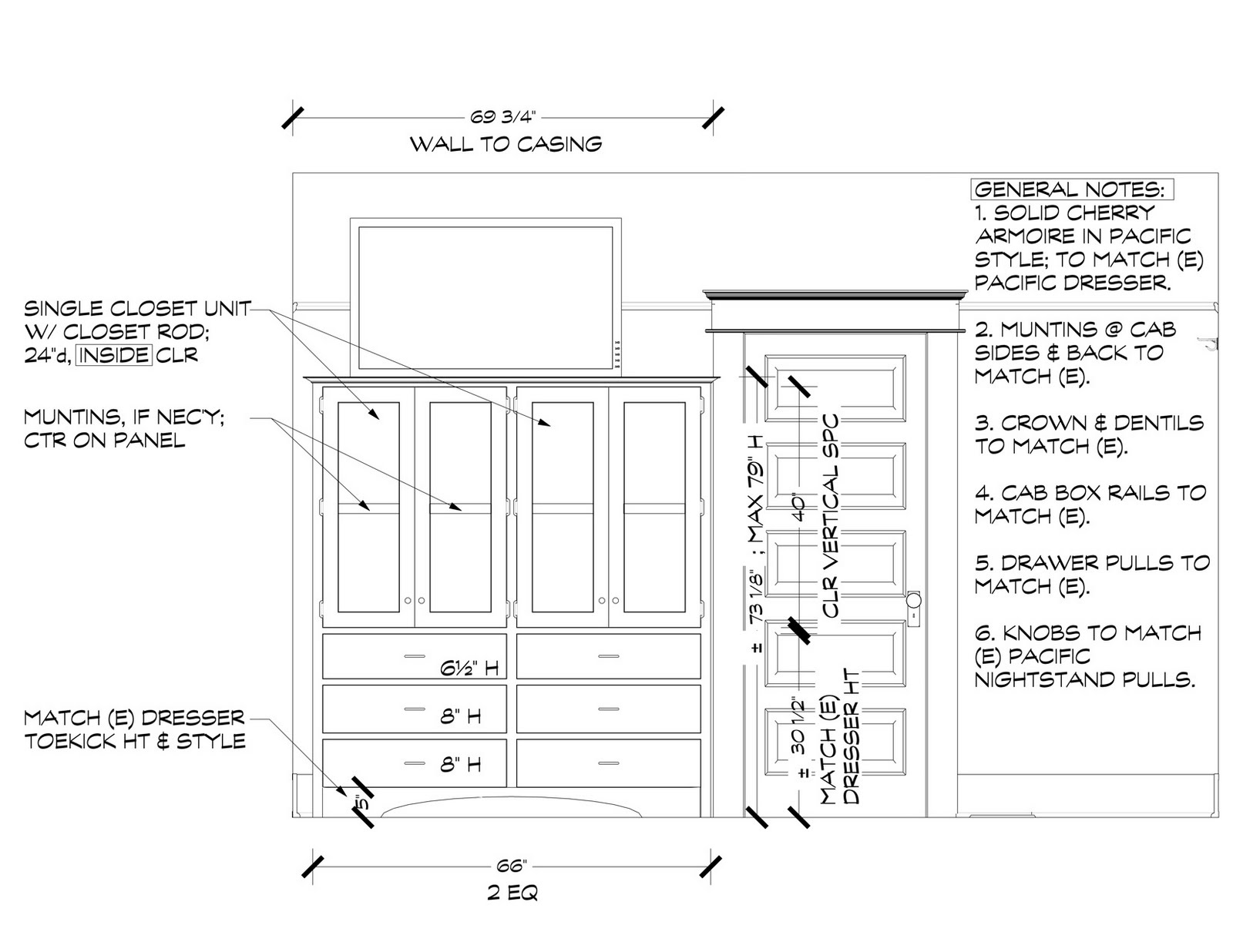
Most of all, we are excited to have Robert Theiss of Falcon Designs make our custom cherry armoire for the Master Bedroom. Several years ago, he made the dresser, bed and night stands. We are looking forward to having him craft a matching armoire. Robert has already begun and anticipates completion by the end of July. How exciting!


Sadly, our bathroom remodel did not make the cut for HGTV’s "Bang for Your Buck." Better luck next time.


Tune in next time for final material selection and the start of demolition, we hope!


Wednesday, May 12, 2010

weeks 50-55: still going…sort of


There’s been miscellaneous work that has occurred recently. Shiloh of Classic Sash & Door stopped by to fit the wood screen replacements. If you recall, one of them was defective and had to be remade. Another arrived too short. While he was here, Shiloh also fixed a couple of the misattached screen hooks and loosened the storms that had been painted shut.

Vitally of Aspen Painting came by to pick up the new screens so that he can paint them in his shop. He’s already dropped them off, so we can change out the storms to screens when it gets a bit warmer.


Daniel of Premier Plus Construction, Inc. installed insulation in the floor under the stair landing. This space had originally been a porch that had been enclosed over the years. We completed the finish work when we transformed it into the new stairwell.

Erik of Ostmo Construction secured the insulation into the ceiling joists at the unfinished storeroom and caulked the threshold at the exterior door to the Mudroom.

Phase 1 took much longer than anticipated. Originally, we were told that it would take 4-5 months to construct the basement. So far we are at a year and six weeks. We are currently waiting on some of the final carpentry, electrical and painting. There’s really not a whole lot to do now. Honest!


Tune in next time for the start of Phase 2!


Tuesday, April 20, 2010

Tour of Remodeled Homes 2010


Each year, the Home Builder’s Association hosts the Tour of Remodeled Homes. This year, we were honored to be one of the 18 homes open to the public for the weekend. There was a steady stream of people both days. I was impressed that some had planned to get through all 18 homes, a feat to be sure. Oddly enough, we were the only basement on the Tour.

Overall, there was twice the number of attendees as last year, but not as much as in years past. Still, 8 hours straight on your feet and schmoozing took a lot out of me. I was very flattered to hear so many compliments. By 6pm, I was ready for bed each night and slept 10 hours on Sunday.

There were a couple of nibbles, but no substantial leads. Sometimes, it takes time for an interested tour-goer to pull the trigger and become a client. The economy is still soft and people cautious. Projects tend to be smaller in scale these days.

Tune in next time for an appearance HGTV’s "Bang for Your Buck" we hope!


Tuesday, March 9, 2010

weeks 43-49: prepping for the Tour of Remodeled Homes


There’s nothing like a deadline to get things done. For us, the HBA’s 2010 Tour of Remodeled Homes was a great kick in the pants to try to take care of the last few construction items, or at least most of them.

In seeing the house come together, the yard was looking a little worse for wear. Knowing that several hundred people would be visiting shortly caused me to hire a landscaper to redo the front and side yards as well as the parking strip and clean up the back yard. He took out the sad-looking magnolia, ceanothus, azalea, smoke bush and mossy lawn, resculpted and moved the camellia, resodded, planted stepables and stepping stones and redesigned and installed the entire front and side yards. John Catandella of Catandella Landscaping did an excellent job, worked fast and hard, was easy to work with and was able to fit us in on short notice. He is awesome! He will return in the summer to help us revision the back yard.

Chuck of ecohaus refloated the floor where the engineered hardwood was not sitting properly. We decided to forego fixing a second section that was also giving us trouble, as it was too difficult for him to do. Chuck was able to reuse all the millwork, flooring, cabinets and threshold. Dana reinstalled them and Vitaly of Aspen Painting caulked and painted, and the Wet Bar was as good as new.


Johnny of Laurelhurst Fan Company installed the blades, nose cone and back cover for our vintage bath fan at no charge. He also camouflaged the galvanized ductwork. Now the fan really sings!

Ron of Stellar Cellars put the finishing touches on the wine cellar. It is now perfect!

The concrete guy came out and patched some of the driveway, curb cuts, egress wells and door jamb.

Erik our contractor of Ostmo Construction spent a whole day attaching various knobs and the dryer vent. It had been dumping hot, humid and dusty air into the laundry room. I was wondering why it was so muggy and linty. My husband leveled the washer and dryer as Erik was having difficulty with that task. Erik was here the day before the Tour attaching the upstairs thermostat, Rainbird (irrigation timer) and adjusting the height on the under counter refrigerator.

We finally got the door hardware back from Bliss Restoration. They had replated some existing door hardware that we had wanted to reuse. Sadly, once Dana the finish carpenter of Guillory Construction had installed them, we decided that removing the door was best. Oh well.

Shiloh of Classic Sash returned with our two screens only to discover that one was the wrong size. Looks like one screen will need to be remade. Doh! He was able to reseat the window hardware though. Pete tweaked the screen door hinge, rescreened the door and installed a closer.

The new kitchen cabinet doors finally arrived from Crestwood and were fitted in the full-height cabinet box. These were replacements for the warped ones.

Alex returned twice to do some quick aesthetic fixes on the neighbor’s garage. Yay! It no longer looks shabby chic!

Pablo and Pancho of Aspen Painting returned to paint the last few cabinetry items, touched up a couple of interior & exterior surfaces, matched the existing dark stain on the main floor and painted the neighbor’s garage. The garage faces our house, so we were happy to finally have this done.

Ben Aldred and Scott Foster of the Hollywood A-boy assisted in selecting a fan for the upstairs bath. The conundrum was whether or not we wanted to vent the adjacent powder as well using an inline fan or just stick to a regular fan venting just the main bath. We opted for the latter then realized that the former was the better decision because it would provide better ventilation and be quieter. C’est la vie!

Aaron of Portland Metro Electric returned to install the under cabinet light at the Wet Bar, sump pump receptacle, office light fixtures and an exterior outlet. He came back a second time to install a light in the master closet and a new fan for the upstairs bath and replaced some oddball receptacles and plates. He also reattached the grounding wire to the house.

Dana, our savior, reinstalled the millwork at the wet bar, installed the replated door hardware, fixed the squeaky powder room door, changed the exterior door hardware to the correct ones, installed a couple of cabinet hinges, a latch and the robe hooks, adjusted the screen door knob, fixed the door sweepers and attached the under cabinet lights at the Wet Bar with a stud gun.


There’s STILL some work to be done. The original 4 month project has taken nearly a year to finish, and now will run into the start of phase two of the remodel. Tune in next time for the last 1% of the original project, we hope!


Saturday, January 16, 2010

weeks 35- 42: more furnishings

It’s been s l o o o w-going these last few weeks. In fact, this entry spans work done in the past eight weeks. Although the pace of the end of the project should not surprise those of you familiar to remodeling, nevertheless it is very agonizing to be this close and still not be done.

We already had our first house guests. They report that their accommodations were very nice and comfortable. Usually I tell my clients not to make the spare room too cozy, lest you encourage longer-than-desired visits. In our case, we needed the extra space, and thus did an all-out remodel in which the new rooms matched the detailing of the existing spaces on the main floor.


Andy of Anctil Plumbing stopped by and repaired the mysterious humming in our plumbing lines. Whenever we turned on the hot water at the kitchen faucet, new bath handheld wand or the washer, the existing pedestal sink would hum. If we turned off the pedestal’s hot water supply, the humming would stop. It was very strange. Andy determined that it was due to pressure building up whenever a fixture was turned on. The excess pressure caused the two ceramics discs in the pedestal’s hot water cartridge (handle) to vibrate very quickly, producing the humming noise. He took the cartridge apart, cleaned it out, reassembled it and voila! No humming! He also showed us how to drain our irrigation system manually. Now, we don’t have to call a professional to winterize the lines. Thanks Andy!

A big kudos to Bill Anctil of Anctil Plumbing. He was extremely proactive in taking care of the mysterious humming. It’s rare to find an owner of a company taking so much interest in a single client, and following through on the job. We love Bill!

Wendy of Bolliger Window Fashions came back to install the last bit of return on the blinds. At the time of the initial installation, one of the mitered returns was damaged. Wendy easily slipped the new piece into place.

We ordered a Chilewich floor mat for the upstairs landing from Relish. It is the perfect size, color and thickness. It also needed to be tough enough to be an entry mat but comfy under foot. We still are looking for a good entry mat at the mudroom door.


After three months, our couch finally arrived from Z Gallerie. We were very impressed by the delivery men from WDI. They were able to think through the conundrum of getting a sectional past a railing, down some stairs and through a door without damaging the furniture, door, exterior light or the house. Although we did make sure that the selected furniture would fit, one never really knows until the sofa is sitting on the lawn. I am glad we got a sectional, did not opt for the larger couch, and did not get the sleeper sofa. Whew!

I picked up an ottoman from Rejuvenation. It can store blankets and remote controls, is the perfect size and is sturdy enough on which to put a cup and saucer but soft enough on which to rest your feet. Aaron was most helpful and made the transaction so fast and easy. Who knew you could just walk into a store and come out with a furniture purchase in under 30 minutes. Thanks, Aaron. We love it!

We finally hung a print that has been just sitting on the dining room plate rail. It complements the neutral tones of the family room very well. I can't wait to get a throw pillow that will help tie all the tones together.


Lastly, I grabbed some used lateral files from this great second-hand office furniture store called Portland Office Furniture. At first I was overwhelmed at how much stuff there was, but then realized that these guys are keeping all this out of landfills. How sustainable! I am still looking for a bookshelf and desk. Used, of course.

We also populated the wet bar and are continuing to stock the cellar. Time to celebrate!


Some time recently, Pacific Power stopped by to lock the electric meter and remove the woody vines that had taken over the electrical supply mast. We are glad that the vines are no longer entwined around our electrical lines.

We finally heard from ecohaus about the mis-installed floating wood floor. The floor still deflects 1/8” or more in a couple of spots, which voids the manufacturer’s warranty. After nearly three months, we are happy that a consensus was made and that the flooring will be redone at no cost to us or the contractor. The new flooring and associated repair work should take one to two weeks to complete. Hopefully, everything will be in good working order before the home tour in early March.

Tune in next time for the last 5%, we hope!


Wednesday, December 23, 2009

remodeling in a down economy: how to save without skimping on design

I have been asked how we are able to do such a large remodel in a down economy. First of all, we have been planning and designing the project for several years. We also purchased the house with the intent of remodeling the basement. As we view this as a long-term investment, it really did not matter when the project took place.

But there were ways that we stretched our dollar that you can too. Below are thirteen pointers that will help you save a bundle on your next project without sacrificing the design.

1. Contain your project to the existing footprint. Additions and large dormers are expensive per square foot, especially in older homes. Adding a floor by raising the roof or building an addition means spending money on an exterior envelope and structure. Instead of building up or out, consider working with what you already have: the basement or attic. In these instances, the shell and foundation are already there, so you can concentrate your dollar on interior spaces and finishes.

It was a no-brainer to finish our full-height basement. By completing the unfinished space, we maximized the use of an under-utilized area of the house, retained the existing landscaping and size of our backyard and economized costs. If we had built out, we would have lost valuable yard space. If we had built up, we would have had to raise the roof, beef up floor and ceiling joists, strap the floors together, add new beams, posts and footings, and increase strength by adding sheathing to the perimeter walls.

2. Plan projects strategically. If you’d eventually like a new kitchen on the main floor, a family room in the basement and want to create a master suite on the second floor by dormer-ing out a new bath, make sure you do the projects in the right order. There’s nothing worse than having to undo some work that you’ve already done. In general, it’s good to work on a house from roof to foundation, and from the outside to inside. In this example, do the dormer and master suite first before working on the kitchen and the family room.

3. Keep existing plumbing fixtures where they are. If possible, maintain the locations of the sinks, tubs and toilets. Moving any of these can add unwanted cost. If the existing layout is undesirable, see if you can place the fixtures back to back or stack them between floors.

In our remodel, we created a wet zone by centralizing all the water in one sector of the house. We placed the new bathroom and laundry right under the existing kitchen and bathroom. By stacking the bathrooms, we were able to tie into the existing soil line, and minimized costs greatly.

4. Visit a store that sells a wide selection of finishes. If you select several products from one store, see if the salesperson can give you a cost reduction. Oftentimes a store can grant a lower price for a larger order. We were able to get a better deal on some of the materials because we got all of our flooring from ecohaus.

5. Ask about discontinued items. When manufacturers change their color palette or style, you can save a bundle on their old stock. The only caution here is to be certain that there is enough material for your project needs. We got our high-end carpet and pad and an incredible price from ecohaus. We also got a great deal on some discontinued lighting from Schoolhouse Electric. Appliances and electronics will have a similar price reduction on last year’s models when the newer lines are released.

6. Look at the ‘seconds’ or ‘scratch and dent’ departments and consider floor models. Rejuvenation offers lighting and hardware in their Seconds and Clearance Department. Schoolhouse Electric has a similar area; ask one of the salespeople to assist you. ecohaus offers some materials like Marmoleum and carpeting in their Seconds and Remnants area. Standard TV and Appliance has a wonderful Scratch and Dent section. Check them out and save!

7. Watch for sales and rebates. Rejuvenation has an annual housecleaning event early in the year and a spring lighting sale. During the course of the project, we took advantage of one of their coupons for our lighting and cabinet hardware, applied a rebate to some hardware and scored a vintage light fixture by using a free shipping offer. We ordered the cork tiles from ecohaus a little on the early side because it was on special. Keep an eye out during holidays as appliances often go on sale then. Some supply stores will also have anniversary sales that are too good to pass up. We waited a few weeks to take advantage of a rebate for our TV. We also took advantage of manufacturer rebates for our window treatments and furnace. Sweet!

8. Don’t forget about those tax credits! The new windows and furnace qualified us for the federal tax credit. These incentives were more than worth it to upgrade to more energy efficient, quiet models. The American Recovery and Reinvestment Act of 2009 includes federal tax credits that encourage homeowners to make energy efficient improvements to their homes. The credit is based on 30% of the cost of qualifying materials (not labor), with a maximum credit of $1500. So, if you spend at least $5000 on qualifying materials between 1/1/09-12/31/10, you should be eligible for the full credit.

See this IRS publication for more information on the 2009 credit.

9. Use some elbow grease. Ask your contractor if you can do some of the labor to reduce costs. If you have the skill and the time, this might be a great way to save a little. Remember to adhere to the contractor’s schedule and level of craftsmanship, and that any work you do will not fall under his warranty. Some past clients have executed demolition, insulated, laid tile, fixed window sashes, installed millwork, painted and cleaned up the jobsite daily. For us, the final cleaning and the denailing of the tongue-and-groove were where we chose to save.

10. Reuse or donate existing materials. Sometimes what is being removed during a remodel is still useable either in your own project or someone else’s. We were able to incorporate some lighting, door hardware and all three existing doors into the basement by keeping the sizes in mind and accommodating them during the design process. We also used the leftover subway tile from an earlier bath project for the backsplash at the wet bar. And because we had saved the base cap and other trim materials, we were able to match the millwork profiles. Although reusing items such as these does not necessarily save any money, it prevents more landfill.

If you are unable to use the materials in your own project, donate or sell them to a company that specializes in the reuse of building materials. Here in Portland, The ReBuilding Center, ReStore by Habitat for Humanity and Rejuvenation are havens for old house parts. The other day, I even walked right past a sink in Rejuvenation that is the exact pedestal in my bathroom. It was weird, but very cool! Although selling items on Craigslist is also an option, first consider donating to a non-profit company, like The ReBuilding Center, as your items are tax-deductible. More often than not, you can claim more on your tax return than what you can sell it second-hand. And you do not have to go through the hassle of posting an ad, arranging a meeting, bargaining and selling the items. So far, we donated lighting and plumbing fixtures, control panels, window sashes, unused tile and some vertical grain Douglas Fir TNG.

11. Talk to your contractor about using salvaged materials. Sometimes contractors and their subs have material leftover from other jobs or from a previous demolition that they are willing to let you use in your project. In these scenarios, you can save tremendously on material costs.

You can also visit those same establishments where you donated your unwanted, deconstructed materials to look for items. If you do reuse old hardware, fixtures and finishes, you will see greater savings if you search for them and buff them into shape yourself. Besides, half the fun is in the hunt. I can spend hours wandering the aisles at The ReBuilding Center looking at all the windows, doors, plumbing fixtures, lights, millwork, hardware and tile. Although you might not save a whole lot by incorporating second-hand items into your project, the more salvaged materials used, the less will go into landfills. And you will be adding to the rich history of your home.

We lucked out by finding the granite slab for the countertops at the wet bar and wine cellar. Normally, the stone itself would cost a bundle, but with our find, we essentially paid only for the labor.

12. Consider phasing your project. If you love the whole design and are unable to afford it all at once, see if you can phase out specific items or portions of the work. It’s always better to save for what you really want rather than settle for second best. After all, remodeling is an extensive use of time, energy, money and resources. It is thus wiser to phase a project into manageable segments than to regret a cost-cutting decision.

We decided to phase some finish millwork, built-in cabinetry, new roofing, some interior painting, gas conversion of the fireplace on the main floor and installation of the AC condenser, and solar water heater. We made sure that everything was pre-plumbed, pre-wired and blocked out for the future installations. By phasing the solar water heater and AC unit, the added bonus for us is that we will be able to take advantage of another round of federal and local rebates when we do the work.

13. Last, and most important, design before you build. If you make your design decisions and finish selections prior to construction, you’ll save a bundle! With a complete set of plans and specifications, there will be minimal change orders and the build-out will go a lot faster and smoother and will be less costly.

Having a clear vision of what you want even before you start designing will also save time and thus money. Write a wish list for the project and prioritize them into three categories: the "must-haves," the maybes and the "if I won the lottery." Assemble images from books and magazines of spaces that you like and—equally as important—dislike. The more ideas you have to share with your architect early on, the less time he will spend developing concepts that may not be to your taste.

We saved on the design fees as I executed the drawings, did the details and selected all the finishes, but you too can hire an architect on a budget by setting some parameters. Establish a budget, specify what kind of design services you would prefer (full or abbreviated), get the contractor involved during design and fully engage in the design process by critiquing the drawings and finish selection. Remember, in the end it is your house and you will have to live with the design, not the architect or contractor. The more feedback you give, the happier everyone will be.

For more information on why you should design before build, please see this previous post.

For information on what to expect during the design process, please see this previous post.

Tune in next time for the last 3%!